Shading Innovation:
Automating Shadow Color Harmony
For a long time, achieving high-end Cel-Shaded results in Unreal Engine meant choosing between two compromises: either settling for a flat, global shadow tint that muddies certain base colors, or embarking on the grueling task of hand-painting shadow maps for every single asset.
During our latest R&D phase, we decided to challenge this workflow by implementing a material-aware shading logic that handles color harmony procedurally.
/ The Problem: Chromatic Intelligence
The core challenge, identified by our Art Director Tarsis Oliveira, was the lack of "chromatic intelligence" in standard NPR setups. By studying how top-tier studios approximate stylized lighting, Tarsis pointed out that shadows shouldn't just be darker; they should shift in hue to maintain vibrancy.
This led to a collaborative effort with our 3D Texture Artist, Lucas Fernandes, who helped with the provision of the artistic framework for how different surface types should react to light.
"The goal was to move away from 'grayed out' shadows and toward the intentionality of 2D illustration."
/ The Solution: Thermal Delta Shading
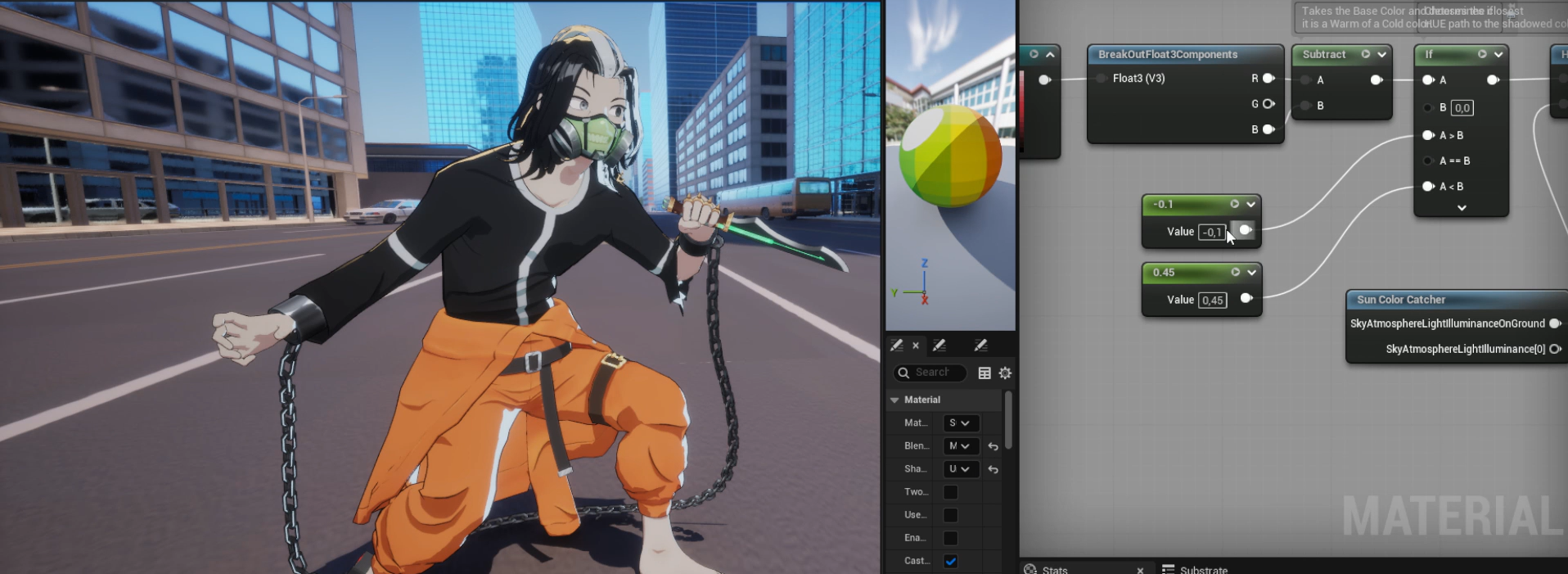
The technical breakthrough came from our Tech Artist, Fábio Cainã. Instead of relying on static parameters, the shader performs a real-time analysis of the base color's thermal tendency.

Fig 01: Procedural color-shifting logic visualization
By comparing the Red (R) and Blue (B) channels at the pixel level, the logic determines if the material is leaning toward a "warm" or "cold" profile. Based on this delta, the shader automatically injects a specific hue compensation into the shadowed areas.
/ Results: A Self-Regulating System
- ■
Warm Materials: Purple or deep crimson shadows.
- ■
Cold Materials: Sharp cyan-blue shadows.
- ■
Zero Manual Input: Fully procedural workflow.
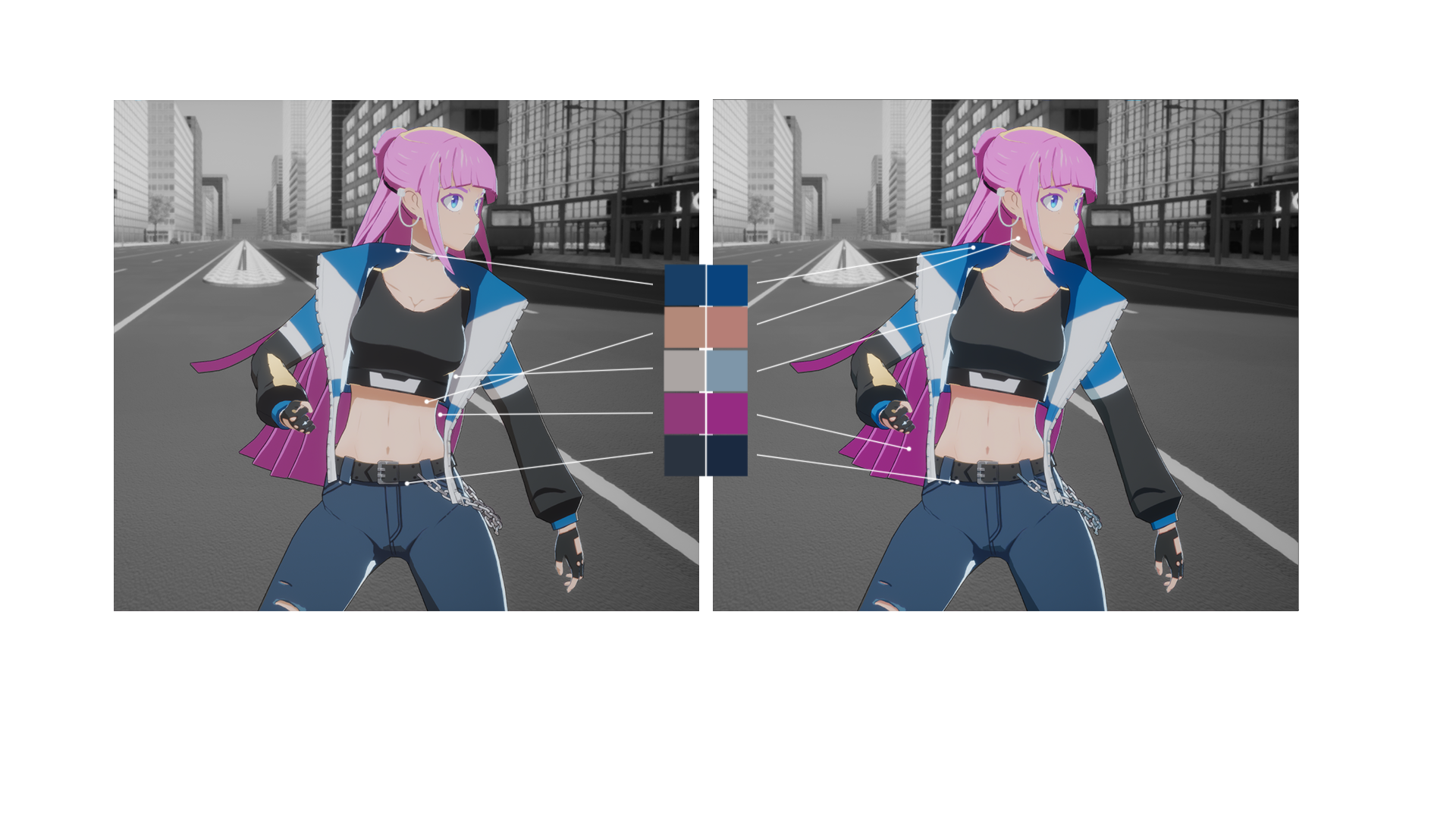
Fig 02: Final render with automated hue shift
Reach out to the developers